KCS vs. BNB: A Complete Comparison of Gas Fees and Scalability on KCC and BSC
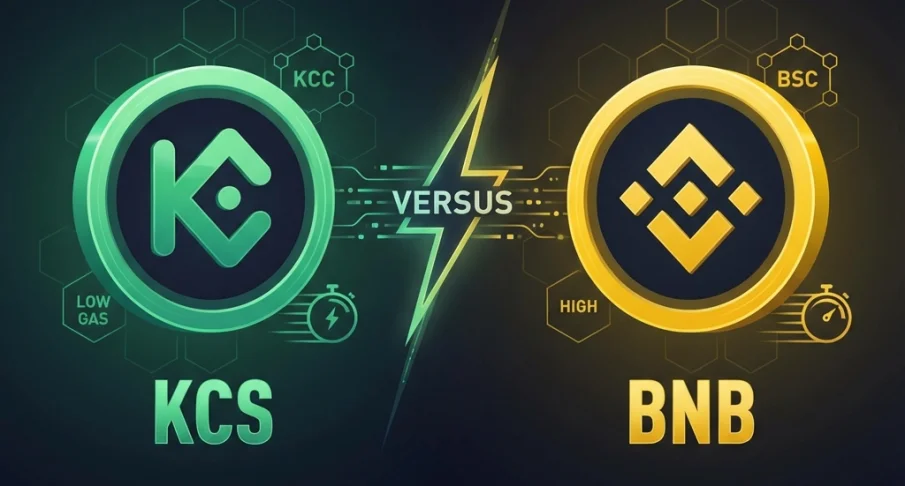
When it comes to choosing an EVM-compatible blockchain for your DeFi activities, gas fees and scalability rank among the most important factors to consider. Two popular options that frequently come up in discussions are the KuCoin Community Chain (KCC) with its native KCS token and the Binance Smart Chain (BSC) powered by BNB. In this comprehensive comparison, we will examine how these two networks stack up against each other.
Overview of Both Networks
KuCoin Community Chain (KCC)
KCC launched as a decentralized, high-performance public blockchain developed by the KuCoin community. It uses KuCoin Shares (KCS) as its native currency for gas fees and operates using a Proof-of-Staked-Authority (PoSA) consensus mechanism. The network produces new blocks approximately every 3 seconds, enabling fast transaction confirmations.
KCC was designed from the ground up to address common pain points in the blockchain space, particularly the issues of high costs and slow performance that plague networks like Ethereum during peak usage periods. Being fully EVM-compatible, KCC allows developers to migrate their Ethereum-based projects with minimal friction.
Binance Smart Chain (BSC)
BSC emerged as Binance's answer to the demand for a smart contract platform that could handle high throughput at lower costs than Ethereum. The network also employs a PoSA consensus mechanism and uses Binance Coin (BNB) for gas payments. BSC has grown to become one of the largest DeFi ecosystems by total value locked and daily transaction volume.
In recent years, BNB Chain has expanded its infrastructure with solutions like opBNB, a Layer 2 scaling solution, and BNB Greenfield for decentralized storage. This multi-chain approach reflects the network's commitment to continuous scalability improvements.
Gas Fee Comparison
Transaction Costs on KCC
One of KCC's primary selling points is its extremely low transaction fees. The network was engineered to keep costs minimal, with typical transactions costing fractions of a cent worth of KCS. Daily transaction fee revenue across the entire network often stays in the hundreds of dollars range, indicating that individual users pay very little per transaction.
Simple transfers on KCC rarely exceed $0.01, while more complex DeFi operations like swaps and liquidity provision remain highly affordable. This cost structure makes KCC particularly attractive for users who want to make frequent trades or actively manage yield farming positions without worrying about fees eroding their returns.
Transaction Costs on BSC
BSC has maintained its reputation as a low-cost alternative to Ethereum. Current average transaction costs sit around 3 Gwei, translating to roughly $0.01 to $0.03 for simple transfers. More complex DeFi transactions like token swaps typically cost between $0.30 and $0.60, while NFT minting operations range from $0.20 to $0.50.
Looking ahead, BNB Chain has set ambitious targets to reduce gas fees even further. The development roadmap includes plans to cut costs by 5 to 10 times across the ecosystem, with projected average transaction costs falling to approximately $0.005 or half a cent.
The Verdict on Fees
Both networks offer substantially lower fees than Ethereum, making them viable options for cost-conscious DeFi users. KCC tends to edge out slightly lower on simple transactions, while BSC's larger ecosystem and higher liquidity sometimes justify its marginally higher costs through better trade execution and reduced slippage.
Scalability Analysis
KCC's Approach to Scaling
KCC's 3-second block time provides a foundation for high throughput and quick transaction finality. The PoSA consensus mechanism supports up to 29 validators, striking a balance between decentralization and performance.
The network's development roadmap includes KCC 3.0, which focuses heavily on interoperability and scalability enhancements. Plans include implementing a Layer 2 solution and improving EVM compatibility to support more advanced smart contract functionality. These improvements aim to position KCC for mass adoption as the ecosystem grows.
BSC's Scaling Infrastructure
BSC has demonstrated impressive scaling achievements. The network recorded 32 million transactions in a single day during 2023, with peak throughput reaching 2,000 transactions per second. These numbers reflect the network's maturity and its ability to handle substantial load.
The introduction of opBNB has significantly expanded BSC's capacity. This Layer 2 solution achieved 71 million transactions in a single day, reaching 4,500 TPS and establishing itself as one of the most active Layer 2 platforms in existence. The 2024 roadmap includes plans to boost opBNB's throughput to 10,000 TPS while doubling block carrying capacity.
The "One BNB" initiative aims to create seamless interoperability between BSC, opBNB, and BNB Greenfield, creating a cohesive multi-layer ecosystem that can scale efficiently as demand increases.
The Verdict on Scalability
BSC currently leads in raw scalability metrics due to its longer operational history and larger user base. The network's investment in Layer 2 infrastructure through opBNB provides clear pathways for future growth. However, KCC's development trajectory shows promise, and its smaller current load means it performs exceptionally well under today's usage patterns.
Ecosystem Considerations
Beyond pure technical specifications, the strength of each network's ecosystem plays a crucial role in your experience as a user.
BSC boasts a massive array of DeFi protocols, NFT marketplaces, and gaming applications. Popular platforms like PancakeSwap, Venus, and Alpaca Finance offer deep liquidity and battle-tested smart contracts. The Total Value Locked across BSC protocols reached $5.5 billion by the end of 2024, reflecting strong user confidence.
KCC's ecosystem is smaller but growing steadily. Flagship protocols like KuSwap and MojitoSwap provide solid DEX functionality, while projects like Torches Finance and Klein Finance expand lending and stablecoin trading options. The network benefits from KuCoin's backing and access to its substantial user base.
Making Your Choice
The right network for you depends on your specific needs and priorities. If you prioritize access to the widest possible range of protocols and maximum liquidity, BSC provides a more mature ecosystem. If you value ultra-low fees and want to explore an emerging ecosystem with growth potential, KCC deserves serious consideration.
Many experienced DeFi users maintain a presence on both networks, taking advantage of each chain's unique strengths. Cross-chain bridges make it relatively simple to move assets between KCC and BSC, allowing you to capture opportunities wherever they arise.
More to Read:


Previous Posts: