Understanding KUS Tokenomics and Governance on KuSwap.finance
The KUS token lies at the heart of the KuSwap ecosystem, serving as both the primary incentive mechanism and the foundation for decentralized governance. For anyone looking to participate meaningfully in KuSwap's future, understanding how KUS tokenomics work and how governance decisions get made is essential. This deep dive explores the economic design behind KUS and the mechanisms that give token holders a voice in protocol development.
The Origins of KuSwap
KuSwap launched in June 2021 as the first automated market maker and decentralized exchange on the KuCoin Community Chain. The protocol drew inspiration from successful AMMs like Uniswap, SushiSwap, and PancakeSwap, incorporating proven mechanisms while introducing unique elements suited to the KCC ecosystem.
From the beginning, KuSwap aimed to offer more than just token swapping. The vision included creating a community-driven protocol where users could influence the platform's direction through decentralized governance. This approach aligned with the broader ethos of the KuCoin Community Chain itself, which was built by and for the KuCoin community.
KUS Token Supply and Distribution
Understanding the supply mechanics of KUS helps contextualize its value proposition. Unlike tokens with unlimited supply, KUS operates with defined limits that create scarcity over time.
The original KuSwap design established a maximum supply cap of 350 million tokens. When KuSwap v3 launched, the tokenomics underwent significant refinement. The new maximum supply was set at 47 million tokens, with provisions for minting additional tokens only when approved through governance by veKUS holders.
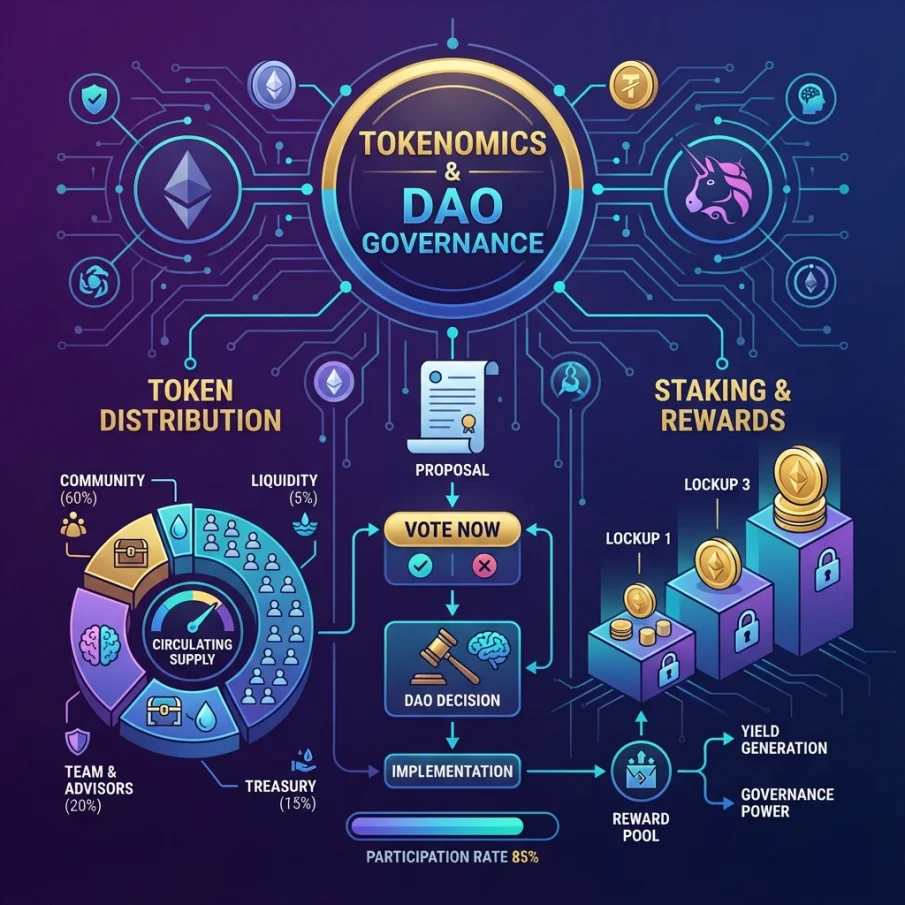
The initial distribution of the v3 token supply allocated 86.67% to existing holders, ensuring that long-term supporters maintained their stake in the protocol. A smaller percentage went to the team, while a bonus pool was established to fund ecosystem growth and incentive programs.
Emission Schedule and Deflationary Mechanics
KUS tokens enter circulation through block emissions, rewarding users who provide liquidity and participate in farming. The emission rate is designed to adapt as the ecosystem grows, with higher liquidity typically enabling higher emission rates.
To ensure long-term sustainability, KuSwap v3 implements a decaying emission schedule. Token emissions decrease by 1% each week, gradually reducing the rate of new tokens entering circulation. This approach balances the need to incentivize early participation with the goal of preserving token value over time.
The protocol also incorporates significant deflationary mechanisms. Fifty percent of all swap fees collected by the platform are allocated to a scheduled buyback and burn program. These regular burns permanently remove KUS tokens from circulation, reducing total supply and potentially increasing value for remaining holders.
The other fifty percent of swap fees goes toward development funding, ensuring the team has resources to continue improving the protocol and expanding its capabilities.
Fee Distribution to Token Holders
Holding KUS provides direct financial benefits beyond potential price appreciation. The tokenomics design ensures that up to 100% of exchange trading fees can flow back to KUS holders through various mechanisms.
In the v3 system, veKUS holders receive 100% of the fees generated from swaps on the platform. This creates a compelling incentive to lock tokens for extended periods, as longer lock durations increase both voting power and fee earning potential.
The Governance System: KUSDAO
KuSwap operates under a decentralized autonomous organization called KUSDAO. This governance body empowers KUS token holders to participate in critical decisions affecting the protocol's future.
The DAO structure ensures that no single entity controls KuSwap. Instead, token holders collectively determine parameters like fee structures, new feature implementations, strategic partnerships, and token emission rates. This democratic approach aligns incentives between the protocol and its users.
Obtaining Voting Rights
To participate in governance, users must first acquire KUSGOV tokens. These governance tokens are obtained by locking KUS for a specified period. The minimum lock duration is 30 days, while the maximum extends to 1,095 days, roughly three years.
The longer you lock your KUS tokens, the more KUSGOV tokens you receive in return. This mechanism rewards long-term commitment to the protocol. Users who demonstrate patience and conviction by choosing extended lock periods gain proportionally more influence over governance decisions.
When you want to reclaim your original KUS tokens, you must sacrifice your KUSGOV tokens. This design ensures that voting power directly corresponds to ongoing stake in the protocol rather than historical participation.
Participating in Proposals
There is no minimum KUSGOV requirement to vote on governance proposals. This inclusive approach ensures that even small holders can have their voices heard on matters affecting the protocol.
Before proposals go to a formal vote, they are openly discussed on the KuSwap Governance Forum. This discussion phase allows community members to ask questions, suggest modifications, and debate the merits of proposed changes. Once discussion concludes, proposals move to an on-chain vote where KUSGOV holders cast their ballots.
The veKUS System in v3
KuSwap v3 introduced the vote-escrowed KUS (veKUS) system, building on proven governance models from other successful DeFi protocols. When users stake KUS tokens, they receive veKUS in return.
The veKUS mechanism creates powerful alignment between governance participants and protocol success. veKUS holders direct operational decisions and hold authority over critical matters like token emissions and the minting of new tokens when expansion is required.
Beyond governance power, veKUS holders benefit financially from their commitment. They receive 100% of swap fees generated by the platform, creating passive income for active governance participants.
Staking and Earning Opportunities
Staking represents one of the primary ways to engage with KuSwap and earn returns on your holdings.
Liquidity Provision and Farming
The foundation of any AMM is its liquidity pools. Users can deposit pairs of tokens into these pools, receiving LP (liquidity provider) tokens that represent their share of the pool. These LP tokens can then be staked in "Farms" to earn KUS rewards.
Farming rewards help offset the risk of impermanent loss that liquidity providers face when token prices move. By earning KUS tokens on top of trading fee income, farmers can potentially generate positive returns even in volatile market conditions.
SYRUP Pools
For users who prefer a simpler staking experience, SYRUP pools allow direct staking of KUS to earn reward tokens. These single-asset staking pools reduce complexity and exposure to impermanent loss, though they may offer different return profiles compared to LP farming.
veKUS Staking
As mentioned above, staking KUS for veKUS provides both governance rights and fee sharing. Platforms like StakingRewards also offer additional venues for staking veKUS with potentially enhanced annual percentage yields.
The Staking Process
Staking on KuSwap follows a straightforward process. First, approve the KUS token for interaction with the staking contract. Next, specify the amount of tokens you wish to stake. Finally, confirm the transaction in your wallet. Once confirmed, your tokens begin earning rewards according to the pool's current emission rate.
Long-Term Vision
The tokenomics and governance systems of KuSwap reflect a commitment to sustainable growth and community ownership. By implementing deflationary mechanisms, rewarding long-term holders, and distributing governance power to active participants, KuSwap creates incentive alignment that should serve the protocol well as it continues to evolve.
As KCC develops toward version 3.0 with enhanced features and broader adoption, KuSwap is positioned to remain a cornerstone of the ecosystem's DeFi infrastructure.
More to Read:


Previous Posts: